Sunday, March 26, 2017

Free Advice

Even though no one asked, I’m going to provide some really good test-taking advice. Some of this might seem obvious and the tone might suggest I am making fun of you (that’s because, I am making fun of you, but in a kind and warm way).

First piece of advice: Answer the question that is being asked. 
If a question says, for example, “Calculate the density of the salt water in the toy Billy is designing and decide if the toy will work the way he wants it too; explain why or why not.” Then the answer is not the math you have to do to figure it out.  The answer is an explanation of why the toy will or will not work the way Billy had intended.  In other words, the answer is a sentence or a few sentences. It is not a number.

Second piece of advice: Draw a diagram. 
If an assessment question asks you to diagram something like convection inside a pot of warming water, writing a paragraph would not be a diagram. A diagram is a picture that should probably include labels and arrows. As much as I encourage you to write - and sometimes a whole paragraph can seem like a monumental accomplishment - it’s not a diagram. They are different things.  

Third piece of advice: Number events in order.
When you are asked to number events in the order in which they occur, use numbers. Don’t use letters. Don’t write down all the events in order. Just put the correct number next to the event on the line provided. If you believe drawing arrows will make things clearer for the teacher, especially if you have already provided letters or made a list (and crossed out and rewritten several of those items), you are mistaken. The arrows don't really help. 

Fourth piece of advice: Write complete sentences.
A question that requires a written response will often include the instruction, “Please write 1-2 complete sentences.” You should, and this will be a surprise to many, write complete sentences. If the question asks, “Describe why we see phases of the Moon,” and you answered “Sometimes see more/less - growing/shrinking,” I’m probably going to mark it as incorrect. You really need at least a couple of sentences to properly describe the reason why we see phases of the Moon from Earth.

Fifth and final piece of advice: Use proper vocabulary
In science, we use terms that are specific and intended to clearly convey concepts. If you use vague words and phrases like “one goes around the other,” I probably will have no idea what you are trying to tell me. We teach you vocabulary for a reason - it’s not just to take up valuable space in your brain.  

Bonus advice: Take a hint.
If your teacher provides a list of vocabulary words to use when crafting a written response, use at least some of those words in your response. For example, if I asked you to describe the process of convection and suggested you use the words density, particles, condense
and expand, you might well assume I expect to see some, if not all, of those words in your description of convection. If you have written an answer that includes none of those words, you have probably written an incorrect or incomplete response.

I’m certain that putting these simple bits of advice into practice will yield better grades - not only in science, but in your other classes as well.  

How’s that? Free advice to help you earn better grades. It doesn’t get any better than that, does it?

Saturday, March 11, 2017

My First Calculator

The tiny hand-held calculator is ubiquitous. They’re small, cheap and utterly reliable. You can pick one up at Staples or Walmart for five bucks. A calculator makes simple computing easy and sweat-free. No more long division scribbled in the corner of your paper. No more
memorizing times tables (but you really should memorize them anyway). And now, you don’t even need a separate device, the calculator is built into your phones.

When they first arrived in schools, it was like a miracle - but the electronic calculator wasn’t the first, it just replaced one that we were already using.

I am old enough to remember a time before hand-held calculators. When I was in high school, one of the items on our school supply list was another kind of calculator. It was called a slide rule.

You don’t realize it, but you just saw people using a slide rule. There is a scene in Apollo 13, were the mission control engineers need to do some quick calculations and they whip out a slide rule to do so. The technical accuracy of this scene in the movie can be debated. 

It might have just been a way for the director to show off some obsolete technology in the film, but it is true that each Apollo astronaut few with a slide rule - they just don’t show it in the movie. 

My graduating class was the last group of students who learned how to use, and actually used slide rules in science class. 

A few years ago I bought a slide rule on eBay. I have a collection of obsolete objects and a slide rule was one thing I needed to have in my collection.

I do not recall how to use a slide rule anymore, but, back in the day, I was pretty good. I was quick and accurate.


Saturday, February 25, 2017

An Anthropologist’s View

I am always surprised and amazed at what I find on the floors of the Bartlett hallways. The last two days before the February break, I picked up everything I found in the hall. I was wondering what would happen if an anthropologist examined what I picked up?

Let me be very clear about two things: I did not pick up anything disgusting - nothing with food reside on it (Gross - and why on Earth should that stuff be on the floor of the hallways?) also; any pencils or pens I found, went right into my borrowing bins so students could use, and re-lose, them again. (It’s sorta like a catch-and-release program).

What did I find? Valentines’ cards, empty candy boxes, a bag ‘o carrots, ranch dressing, school papers, a hair clip, bits ’n pieces of erasers, a $5 La La Buck (what ever the heck, that is), a science magazine (that came from my room), and assorted pieces and parts of packaging.

An anthropologist would put all the objects together and try to discern something about the culture of humans who left them behind. What can we figure out about the people and their culture?

Based on the two school papers found on the hallway floor, an anthropologist might say this is a careless group, but I would disagree. Note the candy boxes: They are empty. If these humans were genuinely careless they would have lost both full and empty candy boxes. Since only empty boxes were found, and assuming they were not on the floor long enough for the mice to empty them, I have to surmise the candy had value to the owners but the empty boxes did not. 

This assertion is supported by the bag ‘o carrots. It is full, unopened and was found in the general vicinity of the packet of ranch dressing. It is probably safe to assume they were together at some point and were dropped by the same individual. They may be become separated by the kicking action of so many middle school feet tromping down the hall. If this culture was one that valued all food items, then the carrots and dressing might have been found open. Since the candy was consumed and only the packaging was lost and the entire “snack” of carrots and ranch dressing was lost before being opened and consumed, it is likely that these individuals value candy over carrots. 

We can extend that idea to the school papers. Since about 120 kids use these halls on a daily basis, finding only two school papers is a pretty low percentage. That tells me the students do, in fact, value their work. If they did not find the work important, I would expect to find many more papers on the floor. Of course, as valued as the school work might be, it probably does not exceed the value of candy.

My conclusion: The humans who inhabit these hallways are selectively careless. They can and do hang on to what the most value i.e. candy, and are willing to let items of lesser importance fall the the floor i.e. empty boxes, school papers, and carrots. As a teacher who is dealing with students who “lose” their homework on a regular basis, I think I have hit upon a solution: I am going to start printing homework assignments on candy. 


No kid is going to lose a worksheet that’s printed on a slab of chocolate, right? 

Thursday, February 9, 2017

The Exquisite Pain of Critical Thinking

I made a mistake the other day in class. I assigned my 7th grade a chapter to read in class and supplied a worksheet with questions about the reading.

As I circulated around the room, I was disappointed to see the majority of my young charges were just scanning the chapter for answers instead of reading. Several scholars had started the worksheet without even opening the book. Only a tiny handful were actually reading the chapter first.

I mentally reminded myself, “Must not supply questions before they actually read the chapter.”

<Ugh>

The scanning for answers has become kind of a thing for my students. I beseech them to read but they resist. Better to get the work done poorly in 13 minutes, than take 19 minutes to read the chapter and provide well thought-out answers to the questions.  

In an effort to avoid the pan-and-scan approach to reading, I often ask questions that require them to use the facts from the reading as foundational information - questions that have no obvious answers; queries they cannot quickly search through the text to find. In other words, I ask them to think critically. I do not accept, “I don’t know’ or ‘IDK.” (See previous post)

You would think I had them strapped to the rack and was slowly turning the giant crank.

“Oh, nooooooo, not thinking!” they wail from the torture chamber that is my classroom.

“How do you think Columbus was able to sail due West from the Canary Islands?”

Gnashing of teeth.

“Compare and contrast our milkweed bug study with Jane Goodall’s chimpanzee study.”

Groans of despair.

“Why do you think locating sources of water on the Moon might be helpful to NASA’s ambitions to send astronauts to Mars?”

Shrieks of pain.

“In your opinion, should NASA receive more funding, less funding or exactly the same funding. Cite three pieces of evidence from the reading.”


Heads around the classroom…..explode.

Saturday, February 4, 2017

Shhhhhhhhhhhhhhhhh

“Welcome to Science,” I say to begin each class. This is my polite way of asking for your attention. When I say this, students are to stop what they are doing, stop talking, and turn to face me.

Sounds like a great plan, and it is. It’s wonderful when it works, and when it doesn’t?

“Shhhhhhhhhhhhhhh,” I say waiting for you to stop playing with your friend’s hair, to stop fretting over the scuff marks on your sneakers, to stop making beautiful eleven-color doodles on your homework, to stop trying to find the the perfectly-right stool to noisily drag to your desk.
I wait.

I shhhhhhhhhhhhhhh so loudly my ever-talkative students can hear me over their off-topic, ill-timed and not-doing-any-work conversations.

What on Earth do you have to talk about so completely all of the time? 

I can shhhhhhhhhhhhhhh so powerfully, it is a shame to waste all the wind and energy just quieting down kids. I should be blowing up party balloons at The Party Store with just one shhhhhhhhhhhhhhh from my lungs.

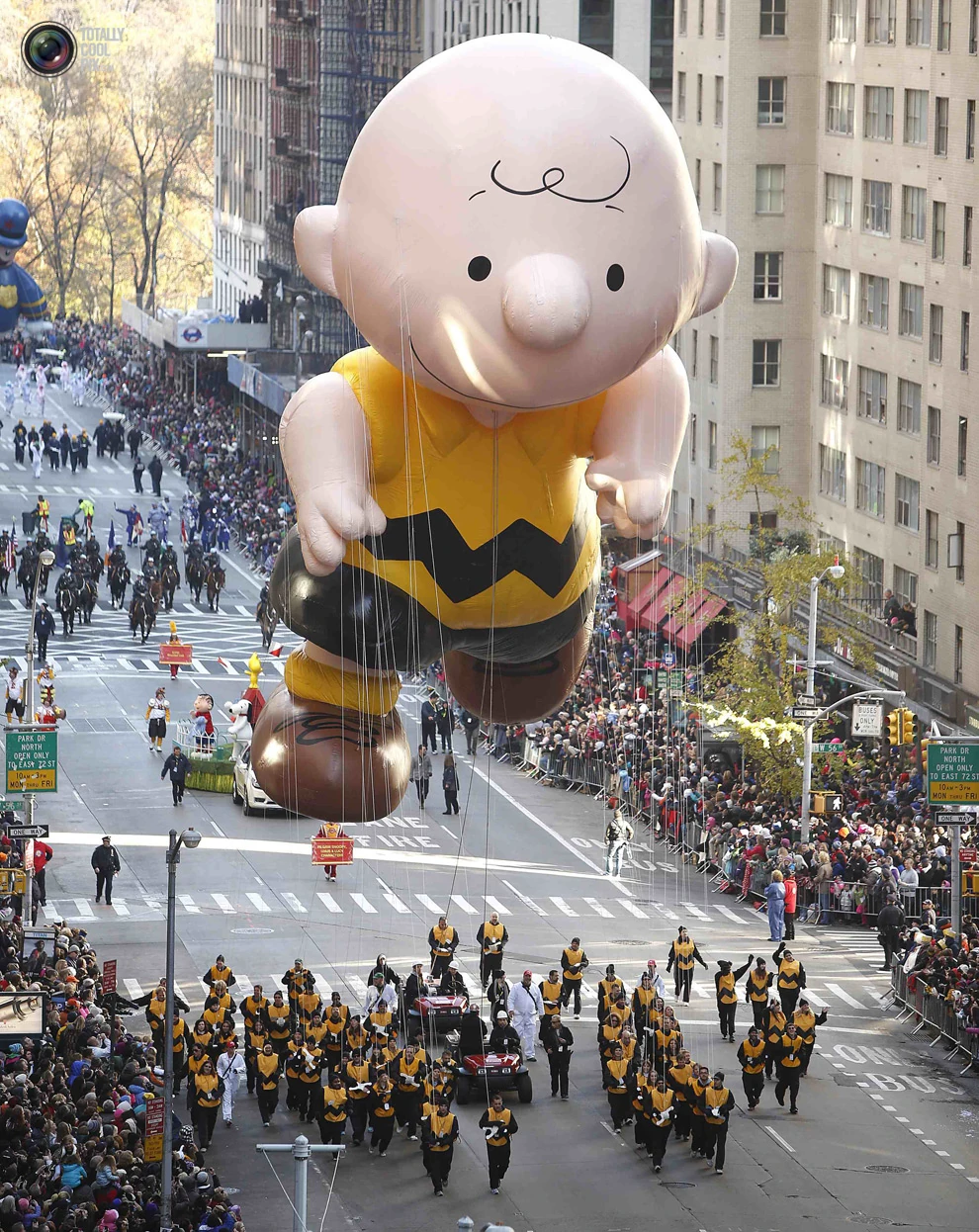
Sometime’s I think i must sound like one of those Macy’s parade helium-filled balloons with a leak. Shhhhhhhhhhhhhhh. “OMG, the Science Teacher ballon has a leak! Someone call 911. Oh, the humanity!”

Sunday, January 22, 2017

So Much Stuff

At the end of each class I do a quick walk around my room. OMG - so much stuff gets left behind.

Naturally, a few kids leave their homework behind. (They’ll probably tell me tomorrow that I never gave it to them).

There are pens and pencils all over the place. Some are from my loaner bins (Would it kill you to just put them back?). Some are mechanical pencils that are out of lead (You know they can be refilled and reused, right?) and some have just been dropped by mistake as their owner walks away. (Can a pencil look lonely?)

There is so much paper I could reassemble a small tree by the end of the day. Some is from my class - Do Nows, Exit Tickets, class work, returned work and more. Some is from other classes. I seem to find a lot of math worksheets left behind. (I suspect these kids are telling their math teacher “You never gave it to me.”)

At the end of each day, I take all the water bottles that have been forgotten, dump them out, water my plants then toss the empties in the recycling bin. Sometimes, I find a brand new, unopened water bottle. (Thank you!)

And the clothing - so many shirts, hoodies, coats and sweaters. I leave them on the water bottle table until I get sick of looking at them, then bring them to the lost and found near the office. 

Books, binders, sneakers, toys, erasers, and other random stuff - It all gets left behind. (Do you ever get home and wonder “Where the heck is my green Gatorade bottle?”)

Maybe we should start attaching your possessions to your body. 

We can duct-tape your library books to your arms, strap that binder onto your back, staple the homework to your shirt, and superglue your sneakers onto your feet. It might not be comfortable, but you’d hang on to everything (whether you want too or not).

Saturday, December 31, 2016

IDK

I often see “IDK” written as an answer to a question on a worksheet, homework paper or test. 

For those out of the texting world, “IDK” means “I don’t know.”

For me, it’s like nails on a chalkboard. It irritates and annoys me. 

IDK tells me this student is not interested or engaged. It tells me the student is putting forth little-to-no effort in their work. 

Think about it, the student who writes this didn’t even make the effort to write out the actual, complete words. Heaven forbid they turn on that magnificent living computer in their skull long enough to really think about the question and compose a meaningful answer.

If you’re being asked the question, there must be a reason. It’s not like we pull questions out of thin air in order to stump you. Perhaps we went over it in class. Maybe it’s in the reading you didn’t actually read, but instead skimmed for answers? 

If you have been in class, you must have some tiny scrap of information to start with…then, in light of that bit of data, maybe give it some concentrated thought, and come up with something…anything but IDK.

IDK tells me this student gave the question about a tenth of a second of thought and if the answer didn’t leap to the forefront of their thinking in that time, they gave up and moved on.

This level of effort is disappointing at best. It shows no perseverance, no mental toughness, no willingness to fight through challenges. And those attributes, more than anything else - more than knowledge, intelligence or education -  are the leading indicators for success. Success in school, at work, and in life, is all about overcoming challenges.

Today, the challenge may be a difficult question on your science homework but this is easy stuff compared to the problems that lie in wait down the road for you. Develop and grow your mental toughness and perseverance and you’ll be better equipped to meet and overcome those problems in the future.


The recipe for success is not IDK.